
In the current debate on packaging sustainability, the food and beverage packaging sector occupies a central position. Purchasing decisions and corporate policies are often driven by emotional perceptions or media trends, but when the goal is to truly reduce environmental impact, it's necessary to rely on objective data. The fundamental question remains: Is there really an absolute “best” material for packaging drinking water?
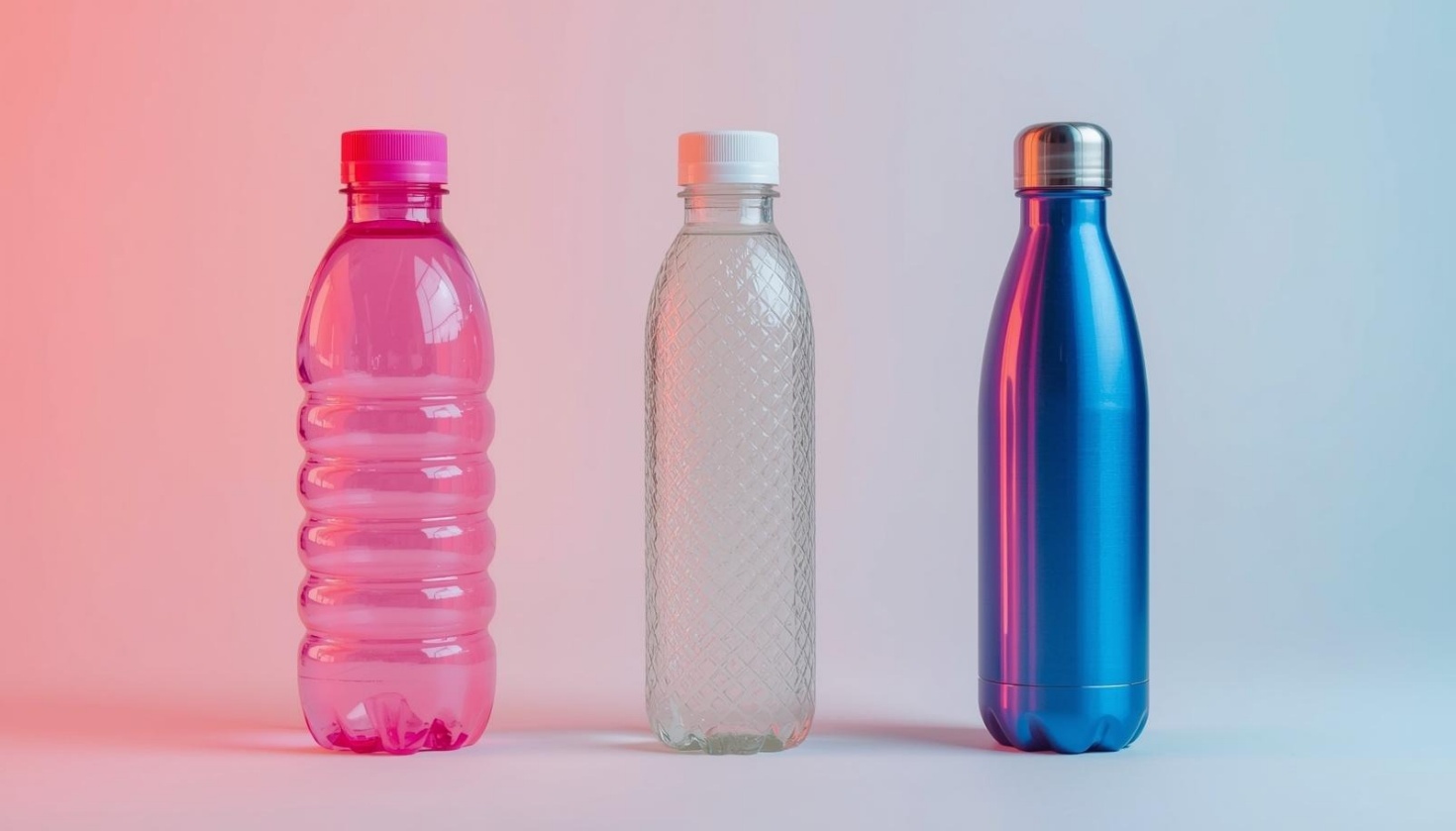
To answer this question, a research conducted by the’University of Ferrara scientifically analyzed three different solutions:
-
Bottles in PET (polyethylene terephthalate, traditional plastic).
-
Bottles in PLA (polylactic acid, compostable bioplastic).
-
Bottles in reusable aluminum (water bottles).
The study used the methodology LCA (Life Cycle Assessment), a holistic approach that allows us to quantify the environmental impact of a product throughout its entire life cycle.
The LCA methodology: measuring the invisible
LCA is now internationally recognized as the most rigorous tool for assessing sustainability. Unlike a superficial analysis based solely on the "end of life" (whether an object is recyclable or not), LCA examines every single phase:
-
Extraction of raw materials: the energy and resources needed to obtain the polymer or metal.
-
Transformation processes: CO2 emissions and water consumption during production.
-
Transport and distribution: the logistical impact based on the weight and volume of the packaging.
-
Usage phase: including washing and maintenance processes.
-
End of life: energy recovery, mechanical recycling or composting.
This approach avoids so-called “burden shifting,” i.e. the shifting of environmental impact from one phase of the life cycle to another, ensuring a transparent overview.
PET: Industrial efficiency at the service of the environment
A surprising fact emerged from the research concerns the PET. Contrary to the common narrative that demonizes plastic, the study highlights how polyethylene terephthalate bottles have a lower environmental impact than bioplastics (PLA) in most of the categories analyzed.
There are many factors that determine this advantage:
-
Production efficiency: PET molding and blowing processes have been optimized over decades of industrial evolution, minimizing energy waste.
-
Mechanical recyclability: PET is a noble polymer that can be recycled infinitely. The transition to r-PET (recycled PET) allows to reduce CO2 emissions by up to 30% compared to production from virgin material.
-
Logistics: The lightness of the material drastically reduces the impact of transport.
For the flexible packaging sector, this study confirms a fundamental truth: plastic, if inserted into a correct management system, is not waste but a precious resource.
The Limits of PLA: When Bioplastic Isn't a Panacea
PLA is often perceived as the ultimate solution because it's plant-based and biodegradable. However, the University of Ferrara's LCA analysis highlights significant critical issues:
-
Agricultural impact: The production of PLA requires large crops of corn or sugar. This leads to high land consumption, use of fertilizers and pesticides, which contribute to critical phenomena such as’eutrophication of waters.
-
Complex end of life: Just because it's compostable doesn't mean it disappears into the natural environment. It requires specialized industrial composting facilities, and unlike PET recycling, the degradation process doesn't generate benefits in terms of saving raw materials.
-
Carbon balance: The agricultural phase of PLA may have a greater impact on global emissions than the controlled synthesis of traditional polymers.
In short, biodegradability is an important property for preventing littering, but it does not necessarily mean a lower carbon footprint.
Reusable aluminum: the washing mystery
Aluminum water bottles have become the symbol of the fight against single-use plastic. While reducing physical containers is a noble goal, the study introduces an often overlooked variable: the impact of maintenance.
Analysis shows that washing reusable bottles daily increases their environmental impact exponentially. The use of hot water, chemical detergents, and electricity for heating increases the bottle's ecological footprint, in some cases, to as much as two orders of magnitude higher Compared to a properly recycled disposable bottle, the benefits of aluminum only materialize after hundreds of uses and only if maintenance is performed with extremely energy-efficient criteria.
The hygiene-sanitary factor
The study doesn't overlook safety. While disposable PET bottles guarantee extremely high standards of hygiene and sterility, reusable bottles show a rapid increase in bacterial load if not washed properly. This adds a dimension of microbiological risk that must be considered when choosing packaging.
Towards a science-based circular economy
The research findings clearly indicate that there is no "perfect" material. Sustainability is the result of a coordinated system where priorities remain Reduce, Reuse and Recycle, but with greater technical awareness:
-
PET recycling It is today the most mature and efficient solution for mass distribution.
-
Reuse It is only advantageous if supported by conscious management of water and energy resources.
-
Innovation in bioplastics must aim to reduce the impact of the agricultural phases to become truly competitive.
Conclusions for the packaging industry
For realities like Teamplast, These data confirm that the path to the future must be paved by science, not prejudice. Flexible and rigid plastics play a crucial role in protecting products and reducing food waste.
The real challenge is not to replace one material with another, but to implement a model of circular economy where every design choice is guided by life cycle analysis. Sustainability means managing the system, optimizing recycling, and using materials whose physical and environmental properties offer the best balance between product protection and planetary protection.